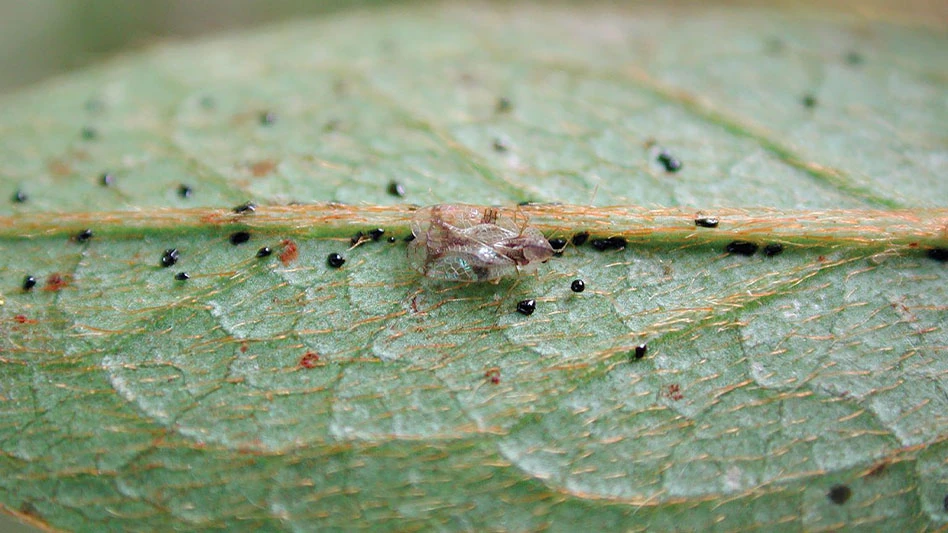

Azalea lace bugs are common sucking insects that occur on many trees and shrubs, injuring foliage and detracting from the plants’ beauty; high numbers of lace bugs cause plant stress or even death.
This introduced pest, native to Japan, was first detected in New Jersey in 1915. It spread quickly to other mid-Atlantic and southeastern states. S. pyrioides was confirmed in 2008 in Washington State and 2009 in Oregon.
Azalea lace bugs feed on both evergreen and deciduous azaleas and rhododendrons. Damage on rhododendrons appears to be more severe than the damage reported from rhododendron lace bug (S. rhododendri).

Explore the August 2023 Issue
Check out more from this issue and find your next story to read.
Latest from Nursery Management
- The Growth Industry Episode 14: Meet Lionel van der Walt, AmericanHort's new CEO
- Growers and suppliers say BFG Supply Co. will close
- Stemmer from BioWorks
- BioWorks introduces Stemmer silicon-based plant health solution
- Silver Fern awarded grant to expand AI-powered demand planning for greenhouse, nursery growers
- All-America Selections announces first three new AAS Winners for 2027
- 2026 Special Recognition Award recipients announced at PPA National Symposium
- [WATCH] July issue recap