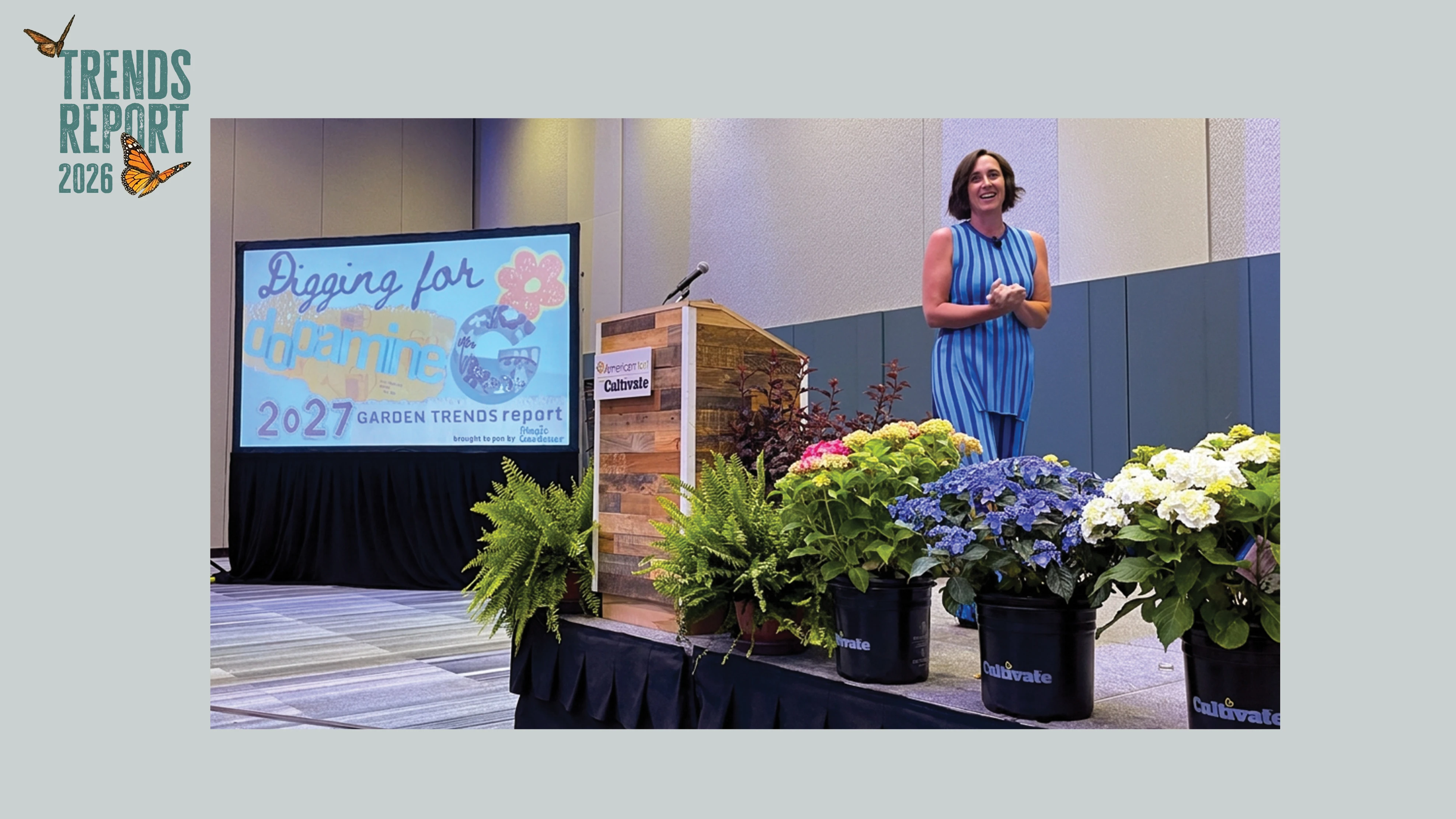
Photo courtesy of Geneiva McNeale
Editor's Note: This article originally appeared in the June 2026 print edition of Nursery Management under the headline “Creating psychological safety: The foundation of high-performing teams.”
Editor's note: The GIE Media Horticulture Group is previewing some of the can't-miss sessions at Cultivate'26 (July 11-14 | Columbus, Ohio).
In her Cultivate'26 session "Creating Psychological Safety: The Foundation of High-Performing Teams," Geneiva McNeale, founder at GLM Leadership Solutions, explores the concept of psychological safety — where team members feel safe to speak up, take risks and be themselves without fear of embarrassment or punishment. It highlights why psychological safety is essential for collaboration, innovation and retention, and offers actionable strategies for leaders and teams to cultivate it intentionally.
Psychological safety isn’t a soft skill — it’s a strategic advantage. By fostering an environment where people feel safe to contribute and connect, leaders unlock the full potential of their teams and create a culture of trust, innovation, and growth.
We talked with McNeale to learn more about this concept.
Nursery Management: Briefly explain the concept of psychological safety.
Geneiva McNeale: Psychological safety is the shared belief that it is safe to take interpersonal risks at work. It means people feel comfortable speaking up with ideas, questions, concerns, and mistakes without the fear of embarrassment or punishment. As a leadership development consultant, I usually refer to it as less about comfort and more about “permission” — the permission to contribute, challenge and learn out loud.
NM: What are some important steps a company leader(s) must make to encourage employees to speak up and share ideas?
GM: There are a number of things that can influence a more psychologically safe culture. The top behaviors include:
Model vulnerability and curiosity. Leaders who have the willingness to say “I don’t know” or “I was wrong about that” send the message that imperfection is acceptable, and learning is okay, even expected.
Actively invite other opinions, beyond just “any thoughts?” Open with an invitation, like “what might I be missing?” Or “Who sees this differently?” Make it clear that dissent is okay, that constructive discussion is part of good decision making.
Respond instead of react or defend. If someone raises a concern, or suggests an idea, the response can matter even more than the idea itself. Defensive reactions or shutting down ideas immediately sends a clear message that it is NOT safe. Instead, listen and consider it. Even if the answer must be “no,’” a respectful, thoughtful response builds trust.
Close the loop. People are far more likely to speak up when they see that their input leads to action, consideration, or at very least acknowledgement. Share widely when an idea comes from the team, not just the leaders.
NM: What often happens inside a company when employees experience fear of sharing ideas and observations?
GM: Usually silence. And that silence spreads. People learn what is “safe” to say, and most choose caution over contribution. This leads to problems not being surfaced at all, or too late, so they cannot be addressed before the damage is done. Disengagement thrives in environments with low psychological safety. When people feel their voice doesn’t matter, they withdraw effort and ownership.
NM: Explain what happens when employees feel safe to speak up and share.
GM: This is the fun part! In a culture with psychological safety, innovative ideas can come from anyone, and people have better engagement and ownership of the work. We love our ideas most, and people invest more deeply if they believe their voice actually helps shape outcomes. Finally, the broader range of perspectives and approaches leads to higher quality decisions and outcomes.
NM: How should management act on employees’ ideas/observations?
GM: First is to follow the steps above and make it clear that you are inviting their voices. Actively ask and encourage ideas and input before making big changes that will affect the team. Remember, especially as smaller operations grow, that the owner or GM cannot personally connect with a larger workforce, so empower mid- and entry-level leaders to be the conduit for their teams, and demonstrate that the ideas elevated from the staff are being brought up the ladder of leadership.
When you do start getting more input from the team, acknowledge it. Evaluate ideas transparently when possible, and if it leads to action or change, make it visible and give credit. If an idea cannot be implemented, explain why. Silence is often interpreted as disregard. Whenever possible, reinforce the behavior, not just the outcome. Thank people for speaking up, especially when they are raising concerns or dissenting views. Finally, pay attention. Repeated themes often point to systemic opportunities for improvement.
It takes a big shift in leadership actions and mindset to truly create psychological safety, but it is worth it. In horticulture especially, psychological safety isn’t just a cultural ideal, it is a practical advantage. When people feel free to speak up, companies become more attuned, more responsive and ultimately more capable of protecting both their crops and their people.
Explore the June 2026 Issue
Check out more from this issue and find your next story to read.
Latest from Nursery Management
- The Growth Industry Episode 14: Meet Lionel van der Walt, AmericanHort's new CEO
- Growers and suppliers say BFG Supply Co. will close
- Stemmer from BioWorks
- BioWorks introduces Stemmer silicon-based plant health solution
- Silver Fern awarded grant to expand AI-powered demand planning for greenhouse, nursery growers
- All-America Selections announces first three new AAS Winners for 2027
- 2026 Special Recognition Award recipients announced at PPA National Symposium
- [WATCH] July issue recap