James Gathany, CDC

Editor’s Note: The following article on identifying kissing bugs is an excerpt from the forthcoming PCT book, “Field Guide to Stinging & Biting Arthropods” written by Stoy Hedges and Dr. Gerald S. Wegner. For more information on PCT-published books, head to https://store.pctonline.com/pct-field-guide-to-stinging-biting-arthropods
Kissing bugs belong to the subfamily Triatominae in Family Reduviidae (assassin and ambush bugs). They are similar in appearance to a number of hemipteran insects that may be found around buildings including other reduviids and leaf-footed bugs (Coreidae).

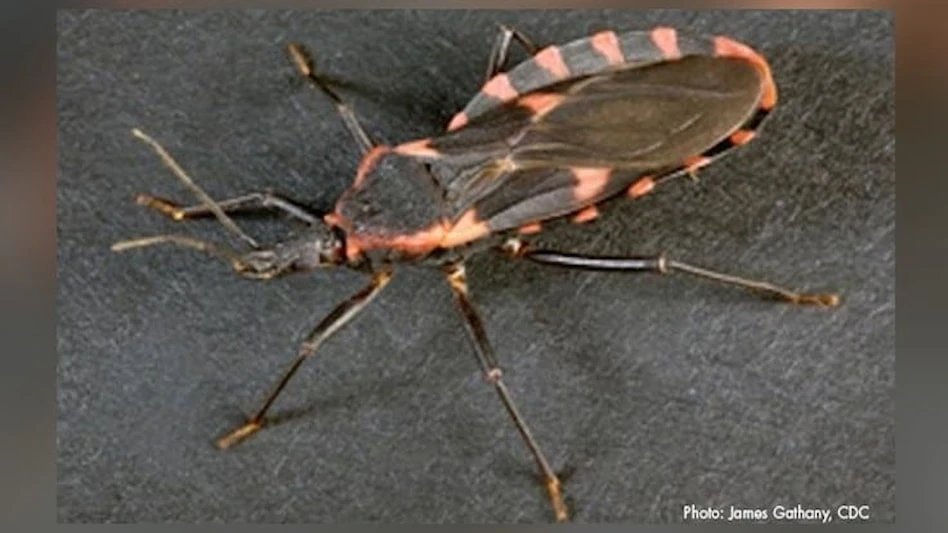
Kissing bugs are larger insects measuring from 3/4 to 1 inch (18 to 25 mm) in length (Figure 1). They derive their nickname of “conenose” bugs from the characteristic cone-shaped head (Figure 2). These ectoparasites have large eyes, a protruding head with a slender “neck” constricted behind the head (Figure 2).
The proboscis is stout and long (Figure 3), designed for piercing the skin and hides of animals. The color varies by species, but these bugs are usually darker insects, ranging from dark grays to browns; however, a number of species have orange or yellow wedge-shaped or bar-shaped markings spaced around the periphery of the abdomen, corresponding to the segmental junctures.

Latest from Pest Control Technology
- Jen Fox Shares Ways PCOs Can Incorporate Sustainability Into Daily Operations
- Alyson Gilleland Highlights Importance of Women's Involvement in Pest Management Industry
- NC Extension Associate Dr. Christopher Hayes Reviews Bed Bug Research, Training
- Christopher Somers Discusses Entomology Background, Receiving ACE Professional Award
- 2025 Crown Leadership Award Winner Ed Dougherty
- Anchor Pest Control's Lewis Antonoff Surpasses $1 Million in Annual Sales for 2025
- Thomas Pest Services Opens New Office, Celebrates 15 Years in Business
- Bruno Milanese Reflects on Experiences During Hurricane Katrina