Editor's Note: This article originally appeared in the July 2026 print edition of Nursery Management under the headline “How it’s made.”
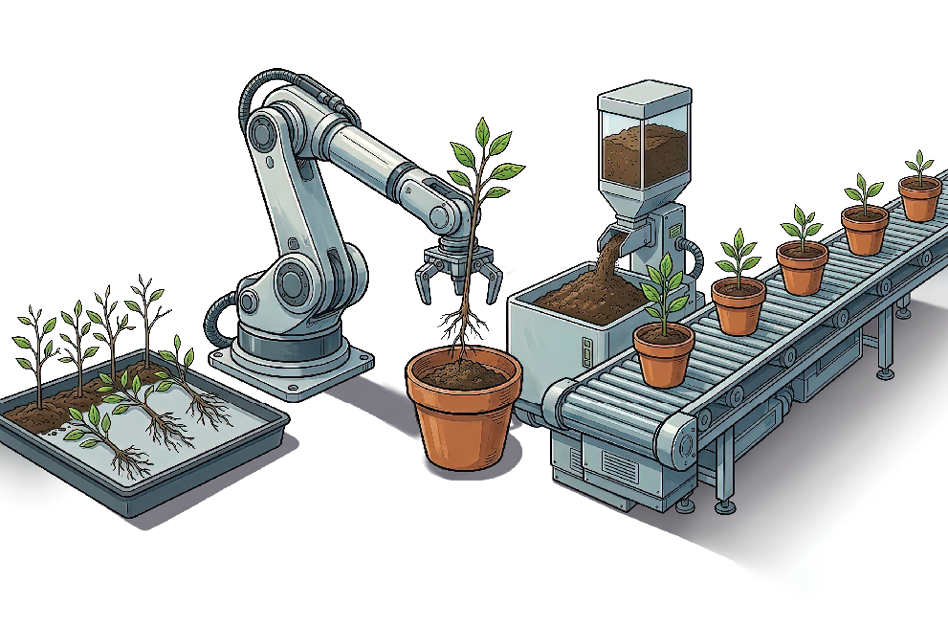
Consumer attitudes about nursery production may seem like a black box to growers. Producers have tuned into the importance of the end consumers’ perceptions and value of nursery plants in terms of appearance, tagging/labeling, native vs non-native and other plant attributes.
However, consumer knowledge and perceptions of production methods, specifically the connection to automation considerations and the impact on employees, is much more uncertain. Consumer attitudes on these topics have been addressed in edible crops due to marketing research on fair trade and sustainably labeled products.
There is a need for a better understanding of nursery automation in the field and marketplace because the majority of producers report labor as their largest challenge.

The consumer perceptions team in the LEAP project (USDA SCRI CAPS -2024-51181-43291) conducted a baseline survey addressing U.S. consumer awareness and understanding of automation in nurseries. Nearly 900 U.S. plant purchasers responded to an online survey in the summer of 2025.
About 69% of the respondents reported being interested in learning more about automation in agriculture, which was a strong majority but less than other industries, such as healthcare (78%) and automotive (76%). When asked if a company’s treatment of employees impacted their willingness to pay for a product, 53% of respondents said “yes,” 38% said “sometimes” and only 9% said “no.”
While responses were positive, 47-48% of respondents said fair treatment, fair wages and labor conditions were “very important” and only 37% said labor efficiencies were “very important.” The slight divergence in ratings for labor conditions and labor efficiencies may be linked to a lack of understanding about how plants are actually produced.
One of the most illuminating questions in the survey asked consumers about their perception of automation use in the production of six common crops: soybeans, petunias, tomatoes, apples, hydrangea and spruce trees. Automation/mechanization use options were “not at all,” “a little,” “a moderate amount,” “a lot,” “a great deal” and “I do not know.”
Consumers thought “a great deal” of automation or mechanization was used to produce apples (23%), tomatoes and soybeans (both 21%) with only 14-15% of consumer thinking “a great deal” of automation was used for petunias, hydrangea and spruce. Similarly, petunias (10%), hydrangeas (10%) and spruce (11%) were the three crops with the highest percentage of consumers selecting automation use as “not at all.”
Although these numbers seem to indicate that consumers see greenhouse and nursery crops as produced with lower levels of mechanization, the percentages of “I do not know” suggests that they have less perceived knowledge overall for flower, shrub and tree crops. For petunias and hydrangeas, 28% of respondents said “I do not know” compared to 19% for apples and tomatoes.

Nearly 30% of plant buyers stated they don’t know about production practices for such common horticultural crops, so we look forward to investigating these topics and developing tailored educational materials. We anticipate connecting consumers with the realities of production and automation to build and sustain an industry where people and operations can both thrive.


Explore the July 2026 Issue
Check out more from this issue and find your next story to read.
Latest from Nursery Management
- The Growth Industry Episode 14: Meet Lionel van der Walt, AmericanHort's new CEO
- Growers and suppliers say BFG Supply Co. will close
- Stemmer from BioWorks
- BioWorks introduces Stemmer silicon-based plant health solution
- Silver Fern awarded grant to expand AI-powered demand planning for greenhouse, nursery growers
- All-America Selections announces first three new AAS Winners for 2027
- 2026 Special Recognition Award recipients announced at PPA National Symposium
- [WATCH] July issue recap