Editor's Note: This article originally appeared in the July 2026 print edition of Greenhouse Management under the headline “Building a strong foundation.”
For Sarah Lehning, young plant manager at Bell Nursery in Virginia, success with young plants begins long before pests or diseases become visible.
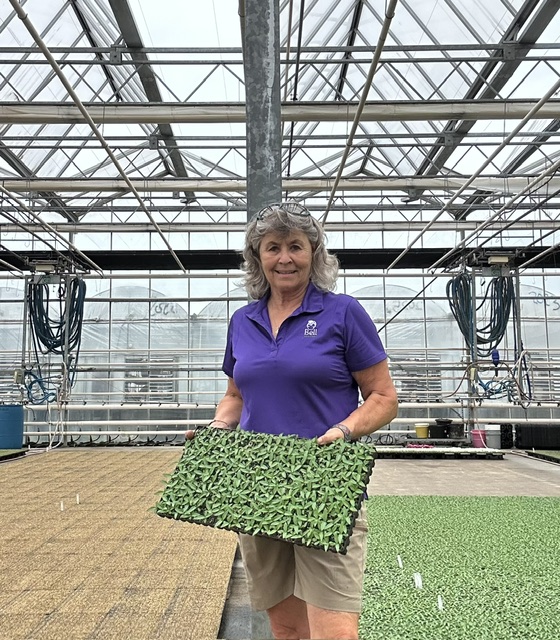
Lehning has spent nearly four decades working with young plants.
Along the way, she developed a philosophy that emphasizes cleanliness, prevention and consistency.
“I’ve been growing young plants for 38 years,” Lehning says. “It’s my niche.”
Today, she oversees Bell Nursery’s young plant program, which involves unrooted cuttings, seeds and plugs for Bell’s greenhouses. Her team supplies starter material for approximately 50 acres of finished production.
Staying ahead of infestation
Because young plants represent the foundation of the entire production chain, Lehning believes successful integrated pest management starts with sanitation and vigilance.
That commitment to cleanliness has become a hallmark of her management style. According to BASF Sales Specialist Mindy Money, every facility Lehning joins quickly becomes cleaner and more organized. She credits those efforts with reducing disease and insect pressure before problems develop.
“Cleanliness is important,” Lehning says. “It really does help as far as disease, insects, everything. You need to clean up, you need to get rid of those weeds, puddles, hobby plants that people like to grow in the corners of the greenhouse. You can’t have all that sitting around.”
A strong IPM program also requires constant monitoring. Bell’s scouting program helps the team anticipate seasonal pest pressures and respond before infestations escalate. Bell also relies on laboratory diagnostics and technical support when necessary.Sometimes while waiting for lab results, Lehning will treat with a broad-spectrum fungicide. “If you see something, you want to treat immediately,” she says.
The right solution
Bell’s young plant program focuses on building protection into the crop from the beginning. That philosophy is one reason Pageant® Intrinsic® Brand fungicide from BASF remains a cornerstone of Bell’s program.
“We usually spray before we see a problem,” Lehning says. “We always use Pageant.”
Pageant combines broad-spectrum disease control with proven plant health benefits intended for use during propagation.
Timing is critical. For URCs, Pageant enters the program almost immediately after sticking.
“We start out with a Pageant drench, which gives us disease control plus the Intrinsic properties, which help with stress relief, better rooting and quicker rooting,” Lehning explains. “The Pageant on the URC goes in on day two. As soon as the cutting’s stuck, we’ll do an over-the-top spray of a rooting hormone, and then the next day, we’ll sprench the Pageant to get it nice and coated down into the root zone.”
The rooting benefits have made a lasting impression throughout her career.
“From what I’ve seen just by using it and the research that BASF has provided, that Intrinsic property enhances rooting, (and) that’s really important,” Lehning says. “The sooner you get roots, the sooner you can reduce water misting, which helps with disease prevention.”
Don’t let the pests get you down
As crops progress, the Bell team rotates additional BASF products into its preventive program based on crop timing and seasonal pressures. One of those products is Ventigra® insecticide, which provides control of key piercing-sucking pests such as aphids and whiteflies. Lehning often incorporates Ventigra before pest populations become established.
That proactive approach extends to other BASF solutions in Lehning’s rotation. Velifer® bioinsecticide provides another preventive tool against soft-bodied insect pests and fits well within an integrated program focused on resistance management and early intervention, Lehning says.
For mite management, Lehning relies heavily on Sultan® miticide.
When conditions favor mite development, miticide becomes an important preventive application.
“Even before we see them, we’ll start using the Ventigra, Velifer and Sultan for the mites,” Lehning says. “Those products are applied at least once, if not twice, if I can work it in.”
The goal is simple: Deliver clean, healthy plant material throughout the Bell network. For Lehning, successful greenhouse management isn’t about finding a single silver bullet. It’s about sanitation, scouting and preventive crop protection.
“Before anything goes out the door, I always make sure it’s had a fungicide, an insecticide and a miticide,” Lehning says. “We stay on the preventative side of things.”

Explore the July 2026 Issue
Check out more from this issue and find your next story to read.