


In late May, Dümmen Orange and Syngenta Flowers announced an agreement to establish a joint venture. Both boards of directors have formally approved the deal, and completion of closing is subject to regulatory approval.
Dümmen Orange CEO Ellen Mackenbach-Lakeman and Mark Schermer, global head of Syngenta Flowers, discuss how the companies’ strategic joint venture will impact customer relationships, supply, logistics and new introductions.
This interview was conducted in June, and the answers reflect what was known prior to publication. Watch greenhousemag.com for updates on this news.
Kelli Rodda: How are you thinking about portfolio decisions, and what kind of communication can growers expect about these changes?
Ellen Mackenbach-Lakeman: We’re not in a stage yet where we are discussing portfolios because we’re going through the regulatory process, and we will continue as two independent companies. But when the joint venture materializes, project teams will start looking at the different portfolios.
Mark Schermer: The upcoming season, ’26 and ’27, will run its course, and there are no changes or disruptions to be expected. I think that’s an important message to deliver to the growers. And then we’re going to look at our portfolios, specifically where they overlap the most.
We have to keep in mind what is important to our growers. That’s first and foremost, because whatever we do, we do it with growers at the forefront of our mind, making sure they continue to be successful with our genetics.
And we’re going to continue to build on (our portfolios), but we’ll never do that in isolation. That will be in close consultation with all the stakeholders and partners, and we will make decisions that do not disrupt the business of the growers.
KR: What do you want growers to understand about the financial footing and long-term commitment behind the new company?
EML: The current investors that both companies have will continue to invest in this joint venture. (That shows) they believe in this new joint venture, and they want to be part of it for the long-term.
MS: Both companies have a pretty significant footprint when it comes to breeding and a very significant footprint when it comes to production, and a strong knowledge base on how to produce quality genetics and bring them to the customer on time.
We are here to contribute to the industry that we’ve come to appreciate and love. It’s about building a company that is suitable for long-term success in the industry in both innovation and reliable production.
EML: And both companies have a legacy that goes back over 100 years.
KR: Which programs are you most excited about that complement each other, and how will you preserve the depth that each side brings?
EML: By bringing the best genetics together and the knowledge that is behind that from all the employees, we can get even better innovations to the market, and we are aiming to do that in a more accelerated way.
There will be more development opportunities, more career opportunities. And we feel that culture is crucially important. How do you preserve it? Retention of employees is key because that’s where our knowledge is, and we want to make sure that people are part of the buildup of this new joint venture at an early stage.
That’s one of the reasons why we’re already (exploring) how to bring the two cultures together and inviting our employees to join in that so they can help build this.
MS: I want to start with a personal note, because I started my career in the breeding world as a product manager of cut chrysanthemum with one of the legacy companies with Dümmen Orange. And now, I’m really happy to be reconnected to the cut flower portfolio and all the relationships with the growers that I have over there. So, that excites me on a personal note.
There are a lot of opportunities for breeding directions that will complement one another and that will bring innovation up to a new level just by adapting some of our technologies. It’s a huge opportunity for us to ... develop a flowers-first focus.
KR: Which aspects of each company’s culture are being preserved?
MS: Culture is not something that you can put on people. It needs to grow, and it grows in collaboration between people. I’m excited about some of the structures and processes that we’ve built within Syngenta Flowers combined with the entrepreneurial mindset. It doesn’t come by itself, but that’s my North Star vision that I have when I see these companies come together, and that’s truly exciting.
EML: We are doing a cultural diagnostic, trying to identify the overlap between the two companies and where the gaps are and what do we want for the future. And it’s not just us — Mark and myself and the rest of the transformation team — it’s also our employees, because culture is not formed by the leaders.
You have to be a role model, but in the end, it’s the way that our employees work together that will form the culture. Their opinion and their buy-in is crucially important. To Mark’s point, you cannot just drop in a culture. People need to believe in it, and they need to start living it, and then it becomes alive.
KR: When you picture the green industry supply chain, whose needs are guiding your priorities?
EML: The grower is going to be at the center of everything we do. As an organization, you continuously have to adapt, but I think what is quite important for us is that we also try to resolve issues for growers that may be coming in the next three to five years. An example of that is (banned) pesticides and chemicals. I know Europe is stricter in that regard than the U.S. at this point in time, but we need to be ready.
We know that breeding and doing research on more (disease and pest) resistance within our crops is key. But ... the balancing act is going to be making sure we’ve got the new novelties and innovations every year, but also to make sure that we are focusing on long-term issues.
MS: (Our vision is) to make growers successful, so we have to be relevant to the consumer, because a grower can only sell year-over-year if the consumer becomes successful. If we don’t intimidate consumers with new genetics but make their life easier and beautify their gardens, that’s what drives them back to retail, and then the retailer will come back to the grower.
KR: How do you keep the new introduction pipeline flowing so growers don’t see a gap in fresh new varieties down the road?
MS: It’s already here. This news is not disrupting all the work that we’ve done over the last five years. So, the pipeline is already full … and it will continue to flow now and into the future.
KR: How are you approaching the regulatory approval process, and what are the expected timelines?
EML: We work in a lot of jurisdictions. So, ahead of that, we prepared all the documentation to make sure that those processes will flow as smoothly as possible. (We expect completion) can take up to about six months.
KR: What are some of the operational challenges that you expect to overcome with the joint venture?
EML: From my perspective, I think one of the most sensitive topics that we have that we need to start working through is our portfolios. It probably will take several iterations and consultations with our customers, with our breeders, with the supply chain.
MS: Along the way, we’ve figured out different ways of (handling) production, logistics, breeding … these discussions are being started up with all of the different departments. We’re at the very beginning of this, but one of the principles we adhere to that is that the best of both wins. If we find (a process is) insufficient, we’ll pick a new one.
EML: I’d like to point out something from a legal perspective, because Mark and I are talking about how we see the future (of this joint venture), but until the regulatory approval process has been completed, we will continue to work independently.
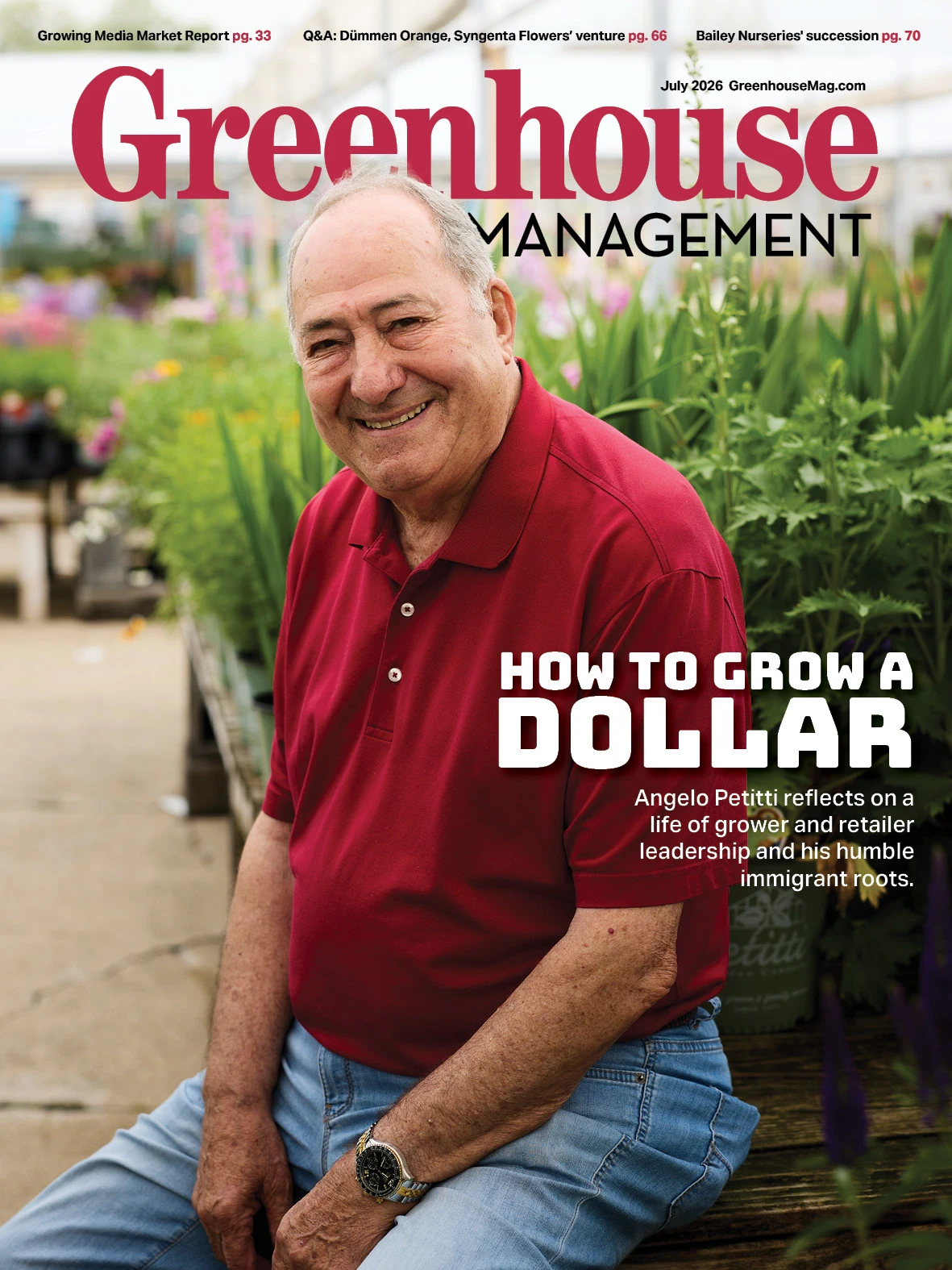
Explore the July 2026 Issue
Check out more from this issue and find your next story to read.