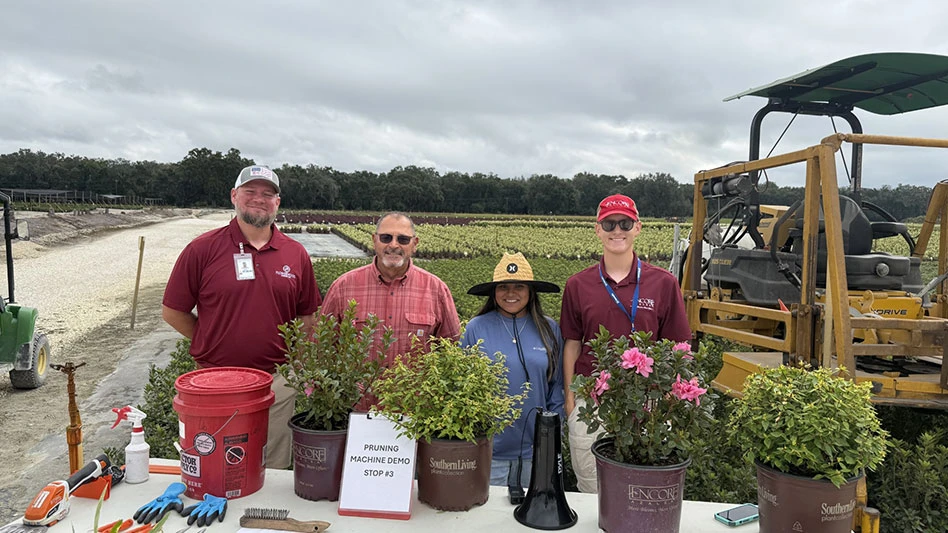
Photo courtesy of IPPS Southern Region
Ask a nurseryman who started in the 1950s what he grew plants in, and the answer is cans, the tin kind.
In 1926, Dutch biologist Frits Warmolt Went demonstrated the existence of a growth-promoting substance in plant tissue. In 1934, the first natural plant auxin Indole acetic acid (IAA) was isolated, investigated and published by Frits Went and Kenneth Thimann. In 1983, Indole-butyric acid (IBA) was identified as a naturally occurring auxin by Epstein, Cohen and Chen.
In 1951, nurserymen produced plants from either seed, cutting or graft; grew them either in a can or in a field; and then dug them out in the long haul to sell to the end consumer. Back then, it was difficult to get information on rooting hormones, and not having a society or proceedings made it even harder for professionals within the industry to communicate.
IPPS originally started as the International Plant Propagators’ Society, to allow academics to communicate to people in the developing nursery profession the information to improve their propagation success.
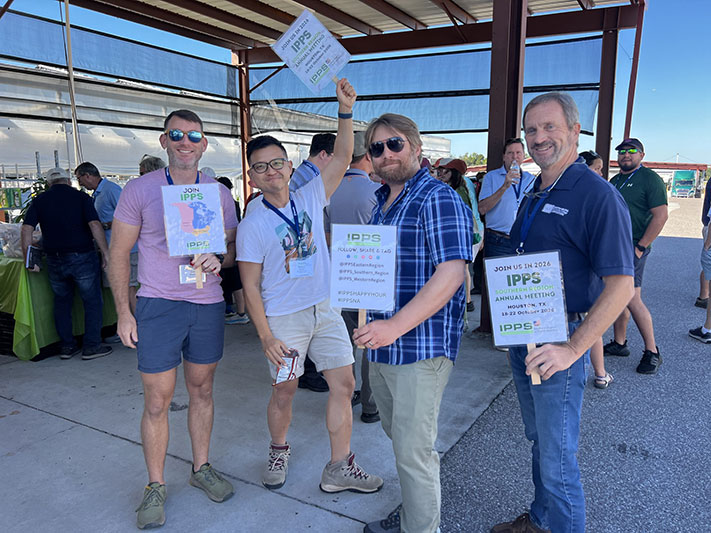
A group of IPPSers promotes the 2026 annual meeting. (Photo © Brie Arthur)
IPPS changed the name (not the acronym) in 2025 from International Plant Propagators’ Society to International Plant Production Society, to reflect the ever-changing green industry.
Historically, much of the industry focused on propagation, with individual nurseries producing what they grew from start to finish. Today, specialization has led the way to facilities that produce only young plants and sell “liners” to other nurseries that grow on and finish that plant material.
Plant branding and patenting also influenced the name change, as specialized young-plant producers can better manage royalties associated with improved genetics.
The name change reflects the modernization of the nursery industry and its evolving needs.
Editor's note: Listen to our episode of The Growth Industry podcast with Brie Arthur and Liz Erickson about why the organization changed its name, why young horticulturists should consider attending their local region's meeting, and what to expect on the massive 2026 IPPS International Tour. Click here to listen.
IPPS survived with the industry
The 2008 recession significantly affected the green industry and IPPS, particularly because many nurseries were tied to new residential and commercial development. IPPS suffered substantial losses in membership and investments, forcing the society to regroup. Fortunately, it survived.
During this difficult period, Executive Secretary Donna Foster was hired by IPPS-SR and helped rebuild the Southern Region through strong organization and financial leadership. Under the guidance of many dedicated members, the Southern Region has since emerged stronger and now leads IPPS’s seven global regions in membership.
IPPS, scaled from one to many with the same mission
Founded in 1951, IPPS originally had just one region in North America. Charlie Parkerson, owner of Lancaster Farms and a longtime IPPS member, recognized that the plants and production practices needed for the Southern climate were significantly different from those in the Northeast, Midwest and West Coast. He saw an opportunity to create a regional organization that could focus more specifically on the unique challenges and opportunities of Southern plant production.
Working with respected industry leaders including Sidney Meadows and Don Shadow, Parkerson helped establish the IPPS Southern Region. The goal was to increase exposure to IPPS while allowing each region to focus on the plant material, production cycles and growing conditions most relevant to its members.
The creation of the Southern Region eventually contributed to the development of three distinct IPPS regions in North America, better serving professionals across these geographically and climatically diverse areas.
Today, IPPS has seven regions around the world, including three in North America: Eastern, Southern and Western, with additional regions in Europe, Southern Africa, Australia and New Zealand. Each region has its own character, priorities and autonomy, while remaining connected through the shared mission to “seek and share plant knowledge globally.”
Together, these regions create a welcoming international network of plant production professionals who share knowledge, experience and a passion for advancing the industry.
Opportunities within IPPS: Carry on the legacy
IPPS is the organization that brings the many facets of our industry together, including academics, researchers, nursery and greenhouse professionals, public garden staff, industry-related businesses, and students.
Over the past 75 years, countless IPPS members have built successful careers, made significant contributions to the organization and left behind knowledge and legacies that continue to shape the industry. Many scholarships have been established within IPPS to honor these individuals and ensure their contributions are carried forward.
Charlie Parkerson, founder of the Southern Region, established the Charlie Parkerson Student Research Competition to support and recognize the next generation of horticultural researchers. Following the death of Dr. Charles Gilliam, a respected Auburn University professor, the competition was renamed The Charles’ Student Research Competition to honor both of these influential Southern Region members.
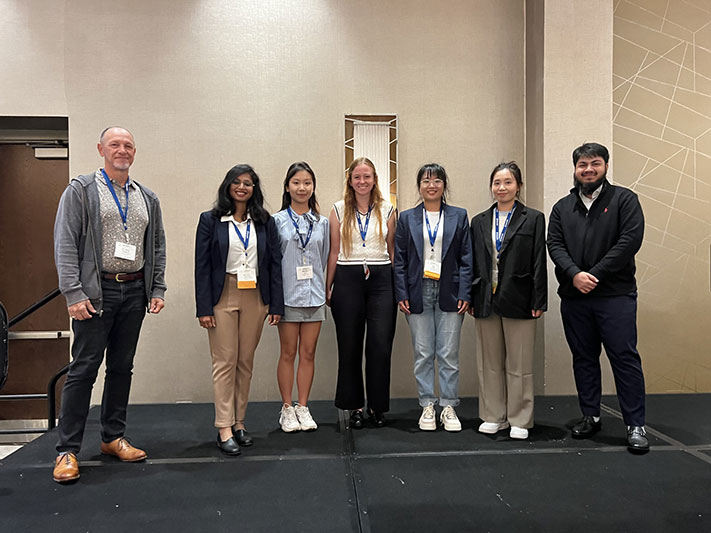
IPPS celebrates scholarship winners at an annual meeting. (Photo © Brie Arthur)
Another important legacy belongs to Ms. Margie Jenkins. At the 2019 IPPS Southern Region meeting in Baton Rouge, Margie was in her nineties, using a walker and sharing her knowledge and enthusiasm with everyone she encountered.
Margie entered horticulture in her 50s and went on to build one of Louisiana’s most respected nurseries, specializing in Southern native trees and shrubs. She was known for her kindness, generosity and willingness to share her knowledge.
After her death in early 2020, the Margie Jenkins First Time Conference Attendee Scholarship was established in her honor, providing an opportunity for a first-time attendee to experience the IPPS annual meeting.
Coach Vince Dooley is another remarkable example of a career that expanded beyond its original path. Best known as a legendary football coach, Dooley became fascinated with horticulture after taking a plant identification class with Dr. Michael Dirr at the University of Georgia.
Horticulture became his passion, and he went on to develop an exceptional home garden and become a highly respected plantsman. To honor his passion for horticulture and his commitment to education, the IPPS Southern Region established the Coach Vince Dooley Student Scholarship for students enrolled in two- or four-year horticulture programs.
Another wonderful opportunity for an early-career professional is the IPPS European Exchange Program. Participants gain firsthand exposure to different production systems, crops, technologies and approaches to plant production while building valuable professional relationships by attending the IPPS European Region meeting.
Just as importantly, the exchange encourages participants to bring what they learn back to their own businesses and communities, strengthening the industry through the sharing of ideas and practical experience.
These are just a few of the many legacies that the IPPS Southern Region continues to honor and celebrate. Through scholarships, research competitions, educational programs and opportunities to attend annual meetings, IPPS is helping ensure that the knowledge, generosity and passion of its members are passed on to the next generation.
Click here for more information about these scholarship opportunities.
The take-home message
- Membership is $150 a year. Early registration is $575, conference-only is $250 and student registration is $195 for the full attendance to an annual meeting for four days.
- The 2026 meeting is in Houston, from Oct. 18 to 22. Members-only early-bird pricing closes Sept. 18, and the hotel block closes Sept. 26.
- The IPPS-SR has many scholarship opportunities for young professionals and students. The Coach Vince Dooley Student Scholarship covers travel, lodging, full registration and $250 of spending money for two-year and four-year students. Every scholarship deadline is June 1, with applications opening in January.
- Send the youngest grower on your crew rather than the most senior.
- Meetings move every year. 2027 is in Charlottesville, Virginia, from Oct. 24 to 28.
Where to go next
- ipps.org: Click Regions, then Southern North America, for events, news and the full scholarship list.
- Social: IPPS Southern Region on Facebook, @IPPS_Southern_Region on Instagram and IPPS Videos on YouTube.
- The full conversation with Ping and Brie: Blooms and Beyond, Season 2 Episode 6, at bandbpod.com.
- Podcast QR code:

Blooms and Beyond is produced by the University of Georgia Center for Urban Agriculture, whose support makes this series and the outreach that grows out of it possible.